
The visual storytelling obsession: What it's hiding from photographers
Understanding the other dimension of great photographs

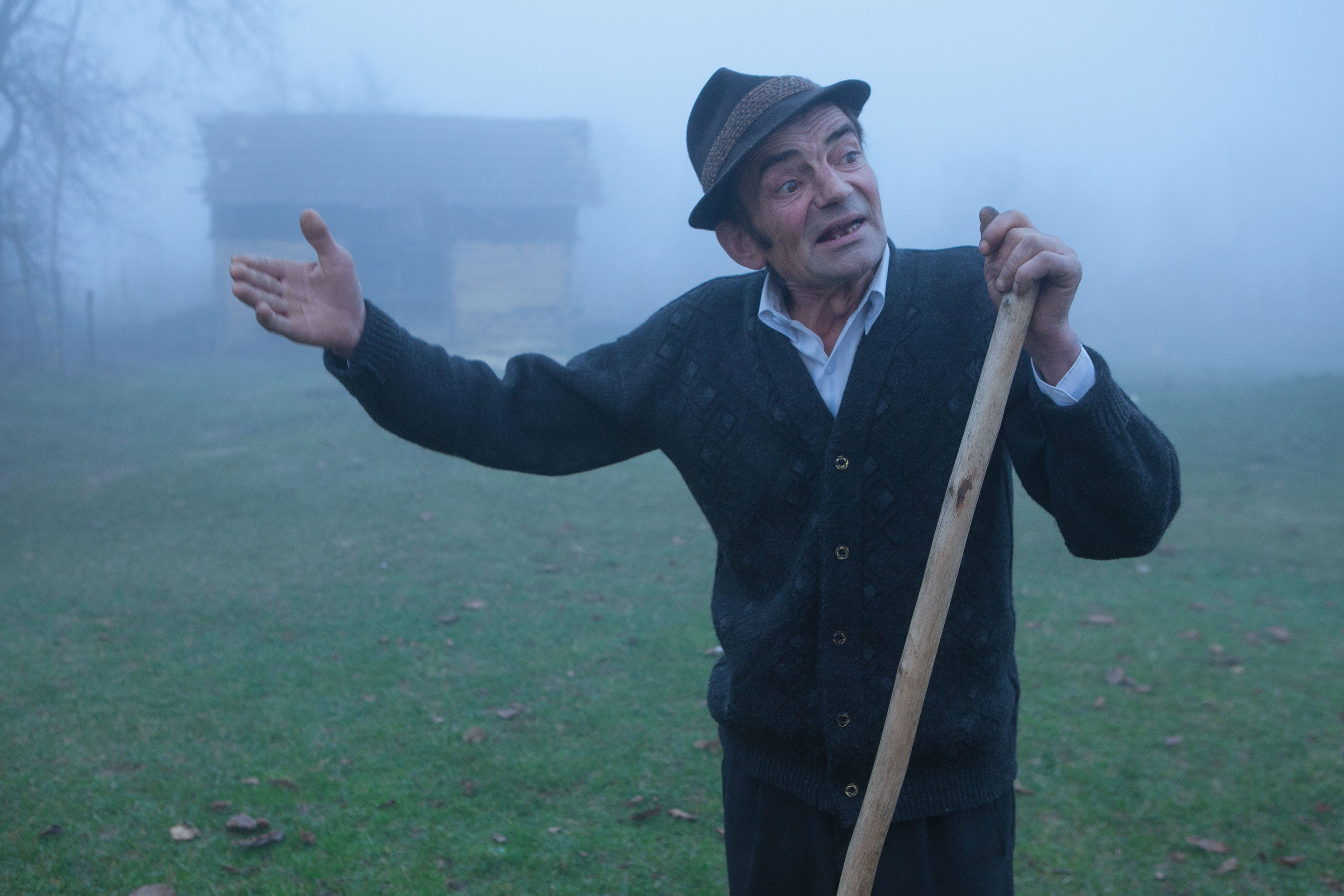
“Visual storytelling” has become photography’s buzzword obsession.
Every tutorial. Every critique. Every “what makes a great photograph” conversation: it all comes back to story. To the point where if your photo doesn’t tell a story, it’s a lesser photo.
Here’s what nobody’s saying: this obsession buries something equally vital.
Yes, photographs can tell stories. But when that’s all we’re hunting for, we become blind to another dimension of photography that’s also there, and one that’s actually just as powerful.
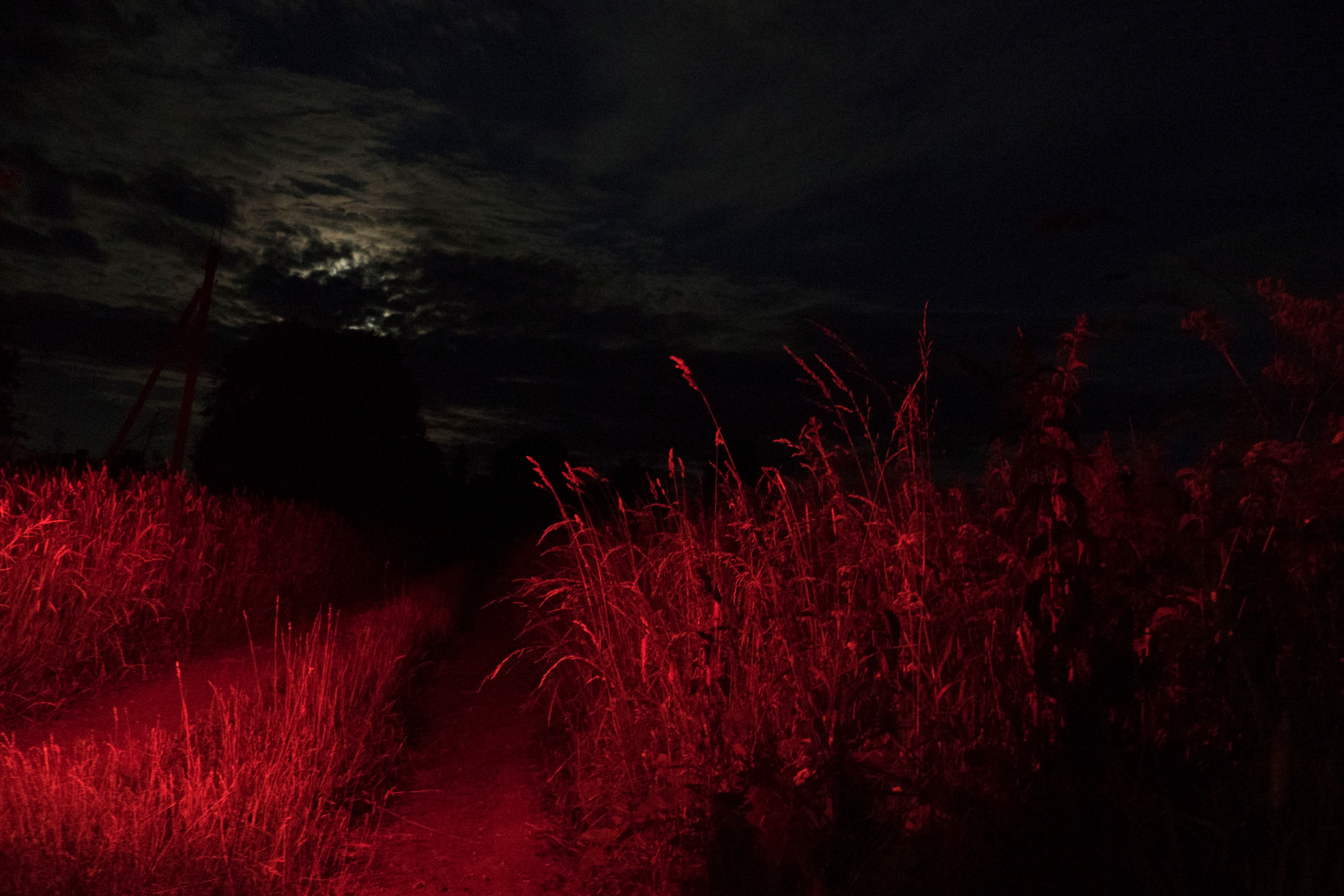
Look at the above image.
What’s the story? Go ahead, try.
You might piece something together, but you’d be inventing it from your own imagination more than reading anything I intended to communicate.
So by the logic of “great photos tell stories,” this should fail, right?
And yet... does it? Something about it lingers, doesn’t it?
That’s because while there’s no story, there’s something else at work. Something you feel before you even think about what you’re seeing.
Here’s the inconvenient truth about photographic storytelling: Photographs are actually terrible at it.
Is this a controversial take? Maybe. But think about it.
Stories unfold. They have beginnings, middles, ends. They move through time. But a photograph? Frozen. Static. One single moment carrying the weight of an entire narrative?
What photographs actually do might be more interesting than telling a regular story. They scatter ingredients throughout the image. I call them visual cues. Things that trigger associations based on your life, your experiences, your personal history.
Sure, that can lead to a sense of story.
But they can do something else too. Those visual cues can also bypass story entirely and work on you in a completely different way, one you might not even be conscious of.
Look up at that image again. The one with the red grass and no story.
What did you feel? Not think. Feel.
A mood? A sense of place? Something wordless?
That’s what’s really happening. This image isn’t telling a story. It’s creating atmosphere. Pure sensory experience before your mind gets involved. Your subconscious is already responding to color, to light, to different sensory visual cues.
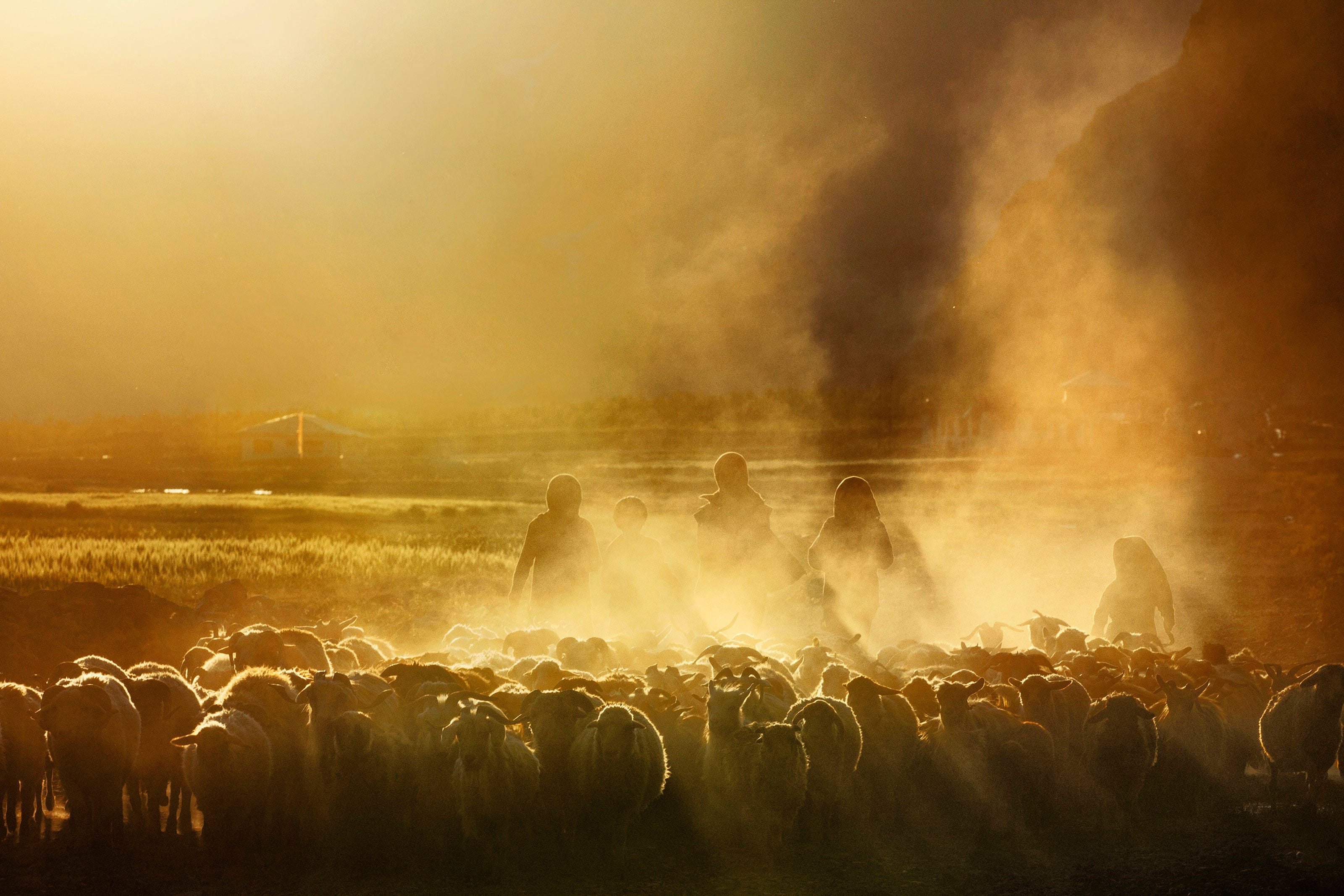
For example, blue triggers associations of vastness: sky, ocean, freedom. Golden light carries warmth, nostalgia, the feel of late afternoon. Darkness creates tension before your mind can even name what you’re looking at.
This isn’t just metaphor. There’s something physiological happening. Your body responds to color and light before your mind finishes processing what you’re seeing.
There’s a blind spot in photography education…
It comes from something most photographers never question.
Almost everything we’re taught about photography was built in a black-and-white world.
Composition. Timing. Visual narrative. All of it developed when color didn’t exist as a tool. Emotion had to come from gesture, light, shadow, and contrast alone.
That way of thinking still shapes how photography is taught today.
And this is where a lot of photographers get stuck.
They learn to read images with their head — What’s happening? What’s the subject doing? What’s the story? — but they’re rarely taught to notice how images feel.
So when their photos feel flat, even though the composition is right and the moment is there, they assume the problem is access, timing, or storytelling skill.
Often, it isn’t.
They’re using a black-and-white mindset to judge a full-color, sensory medium.
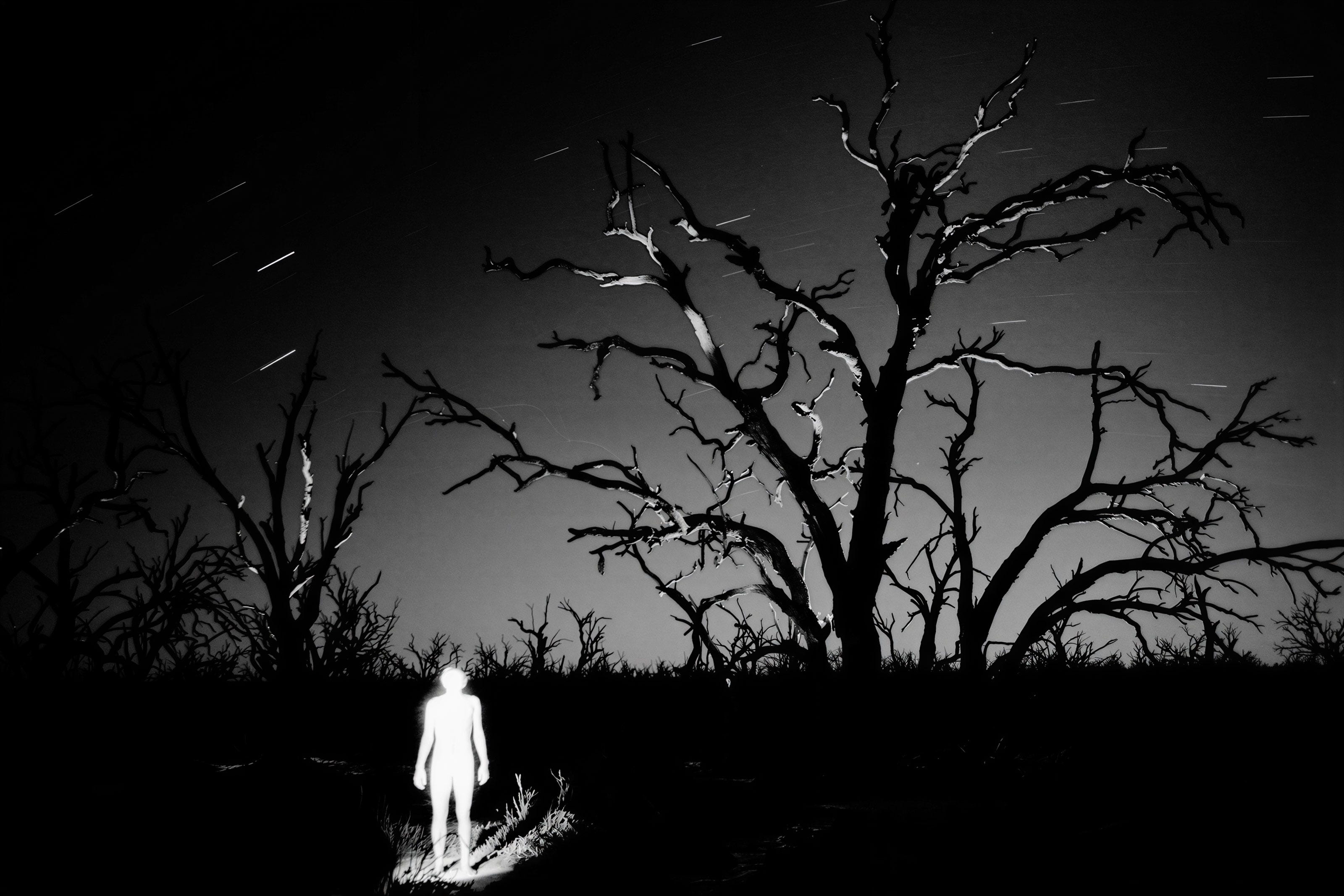
Photographers like Trent Parke show how powerful atmosphere can be even within those original limits. But once color entered photography, we gained a whole new emotional language — and most education never really caught up.
Color and light became “style.”
When in reality, they’re doing much heavier emotional lifting than we’re taught to notice.
Which should you focus on? Story or atmosphere?
Wrong question.
Photos can have both. In fact, the most powerful photographs often do. Though one element usually dominates, they can absolutely coexist.
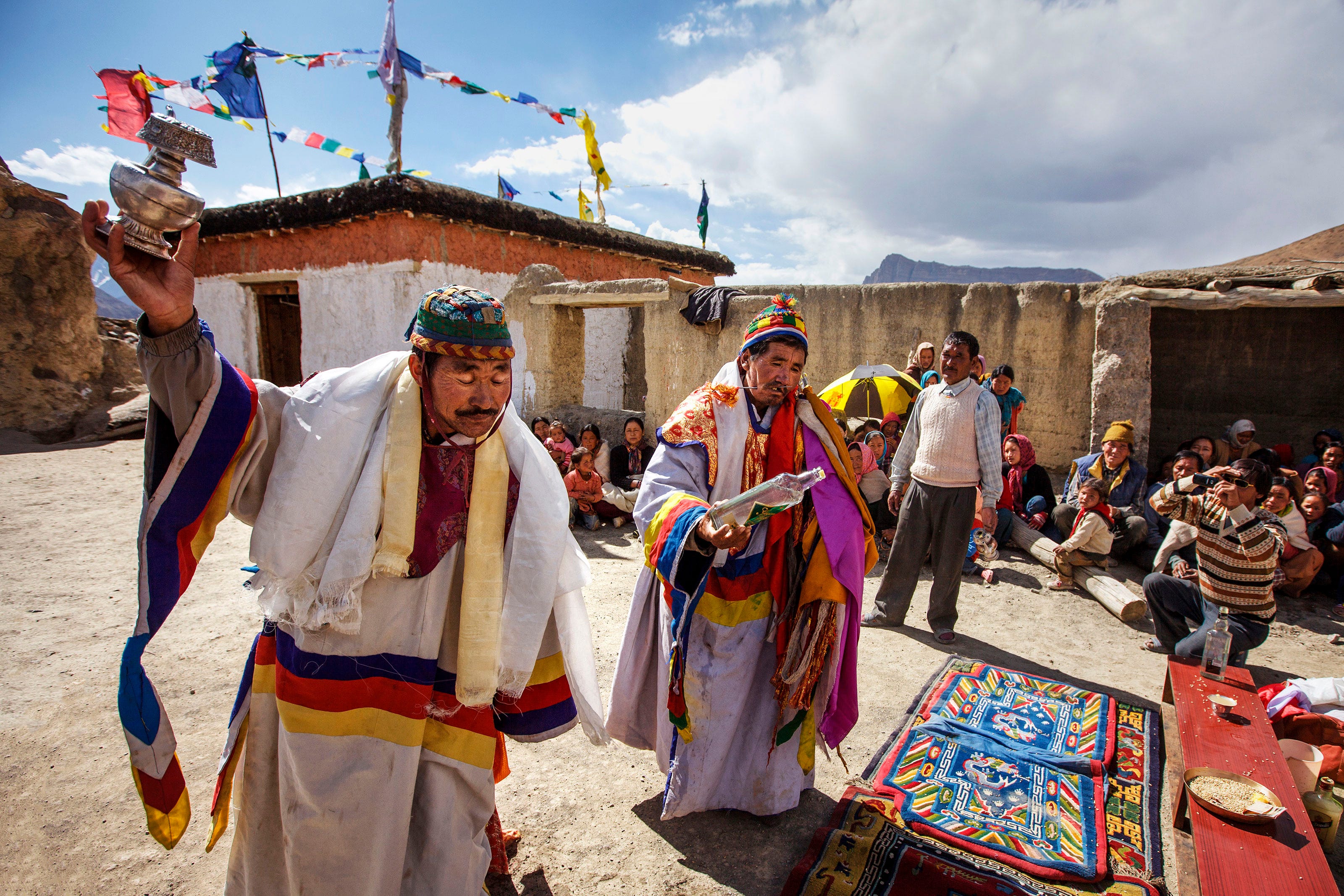
Some visual cues, gestures, expressions, objects that suggest action, pull toward story. That’s definitely the case with the image above. We perceive the story much stronger than we feel something from this image. But, in others photos, like the red grass photo earlier, and Trent Parke’s example, color, light, empty space pull strongly toward making you feel the atmosphere.
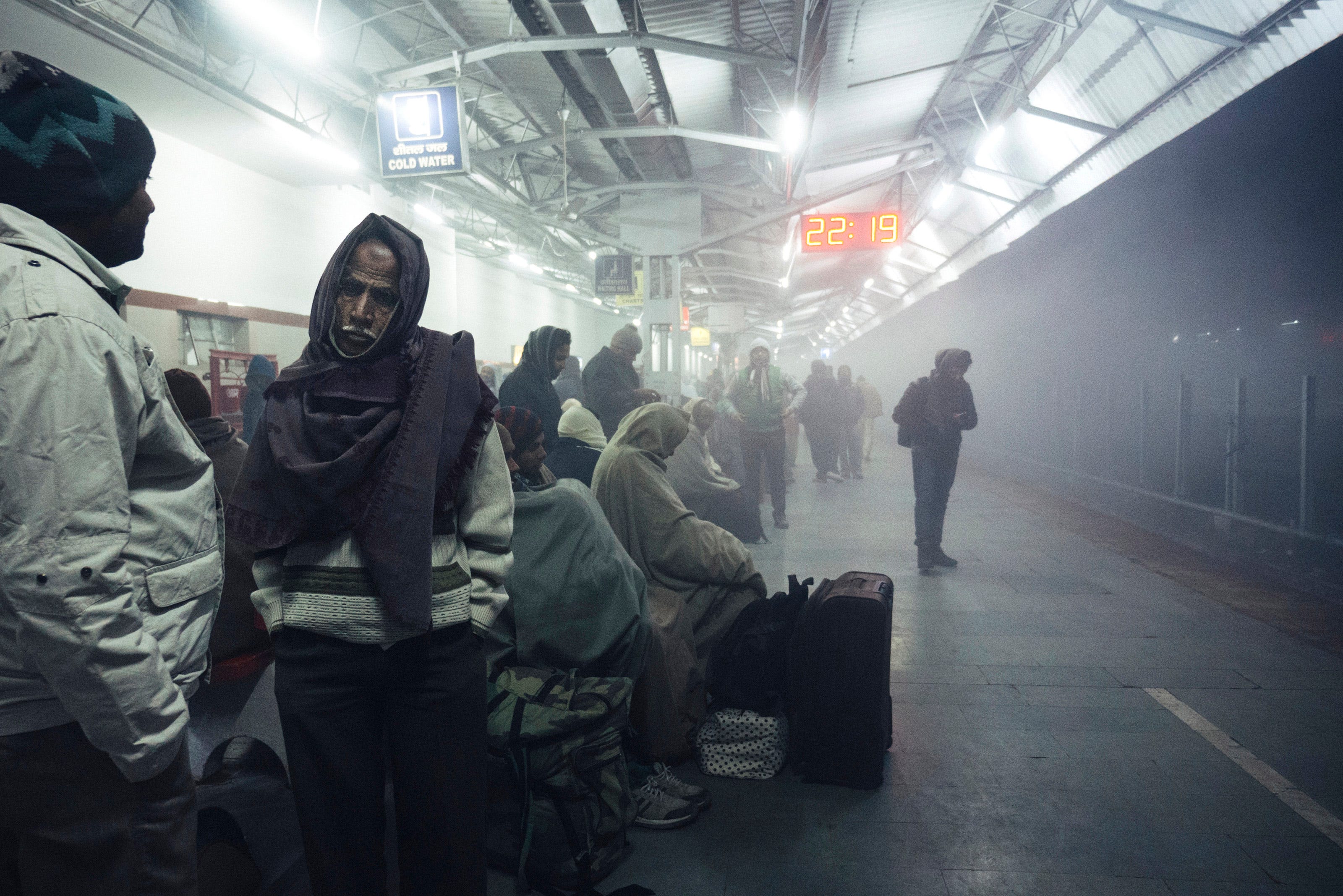
So what happens when both types of visual cues align with equal or almost equal strength?
While this is not necessary for a powerful image, visual cues working together like that can be truly impactful.
Look at the example above. People waiting at a station, it’s late (the clock tells us), they must be traveling somewhere far with those big luggage bags. These are strong sense-of-story visual cues. And there’s a clear sense of what it felt like too. The muted cool colors, the fog. These are visual cues that communicate the cold, the atmosphere of the foggy evening.
Is this harder? Yes. You’re working with more moving parts. There’s more that needs to click.
But when it works, when you successfully layer story with atmosphere, you create photographs that engage viewers on multiple levels. Not just intellectually. Not just sensually. Both at once.
By now this should be clear…
Even though photographs can have story, and often the most powerful ones combine both story and atmosphere, they don’t need to have a story at all.
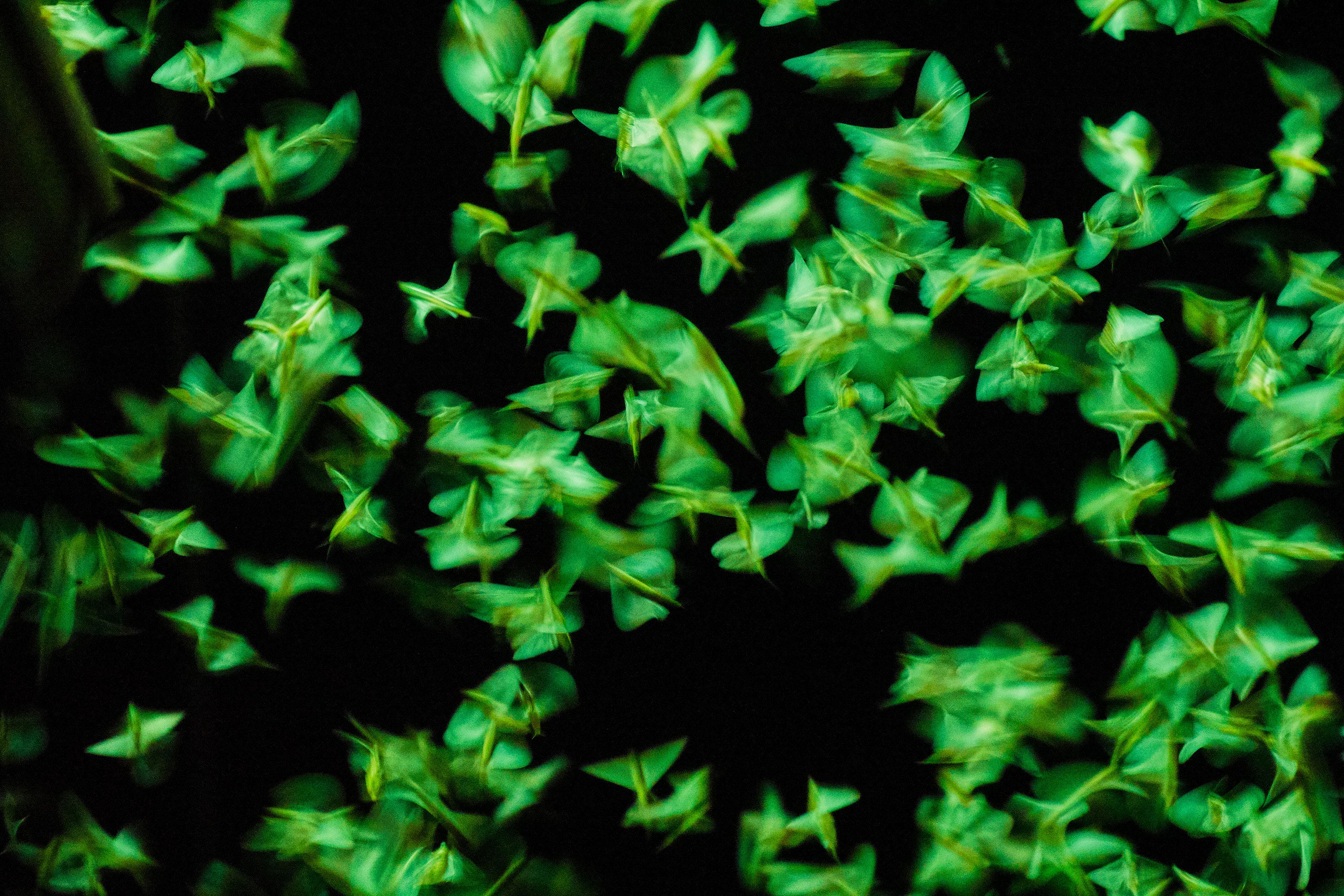
A photograph can be like a poem.
Abstract. Rhythmic. About pure feeling. About a color relationship that shouldn’t work but somehow does. About the way a street light attracts thousands of moths and turns a regular scene into something surreal.
And here’s what matters: those photographs are everywhere. You probably walked past dozens today. You just didn’t notice them because you were looking for stories instead.
Now that you know this, why don’t you try something out…
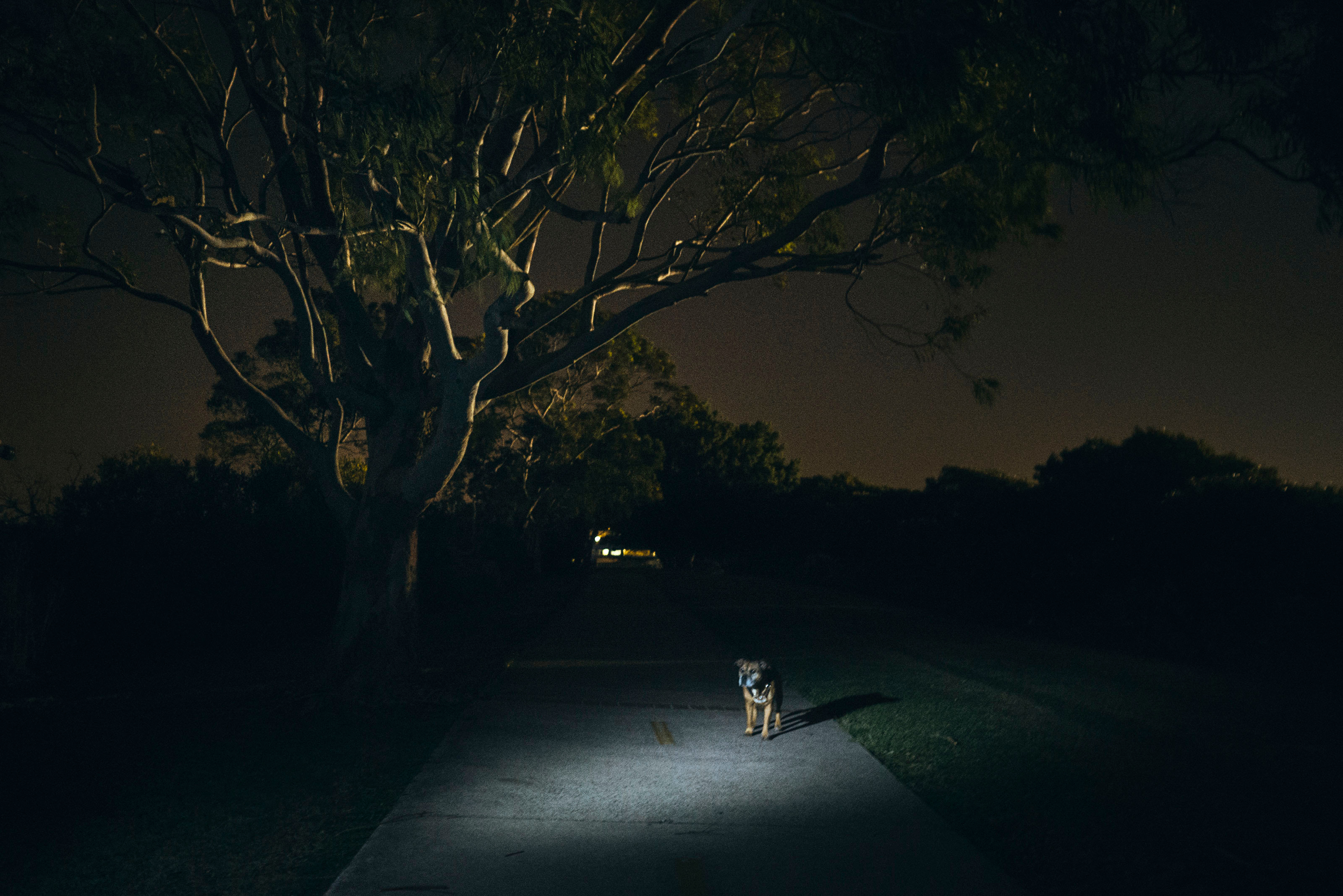
Starting today, for the purpose of a practical exercise, go and hunt for the photographs that aren’t about story at all. Find the ones that are pure atmosphere. Pure feeling. The ones that bypass the narrative center of your brain and go straight to your gut.
They’re waiting for you. They’ve been there all along.
Stop asking what the story is. Start asking what it feels like.
If this way of thinking resonates, the Visual Cues Program is where I break it down practically. It’s the system that’s been at the base of my photography for over a decade. You get AI-based feedback on your own work, and you can also turn photographs you admire into case studies to learn from.
A great series of photos and an interesting article.
As others have said, it's much easier to tell a story, photographically, by producing a project-based narrative rather than via a single image. It's not that a stand-alone image can't tell a story but it is much more difficult. That's why, for me, 99% of photos posted on the likes of Instagram do not interest me for more than a second - and why I deleted my account and left. Many photographers are also not great at considering what the story is that they want to tell - before actually taking the photo(s).
Dear Mitchell, I couldn't agree more with you!
It's fascinating how many times we think we have ideas but ideas simply exist and some of us just perceive them in our own way.
Few weeks ago I pretty much wrote what you just published here, not almost word by word but scarily close to it, and at the last minute I felt like it was not necessary; it felt almost like someone else would do a better job at it and I should expose this idea from another perspective instead, to complement it.
So to avoid leaving a very long comment and, at the risk of seeming like I'm shamelessly plugging my post, I'd love to share it with you as I said, to complement what you just described and to celebrate the fact that we're not alone in this way of understanding –or should I say feeling– photography.
Thank you for a job well done and big thanks to @cedricr for the recommendation!
https://open.substack.com/pub/edonpaper/p/emotions-stories-eggs-and-chickens?utm_campaign=post-expanded-share&utm_medium=web