
Why silence kills portraits
What actually happens when people forget the camera

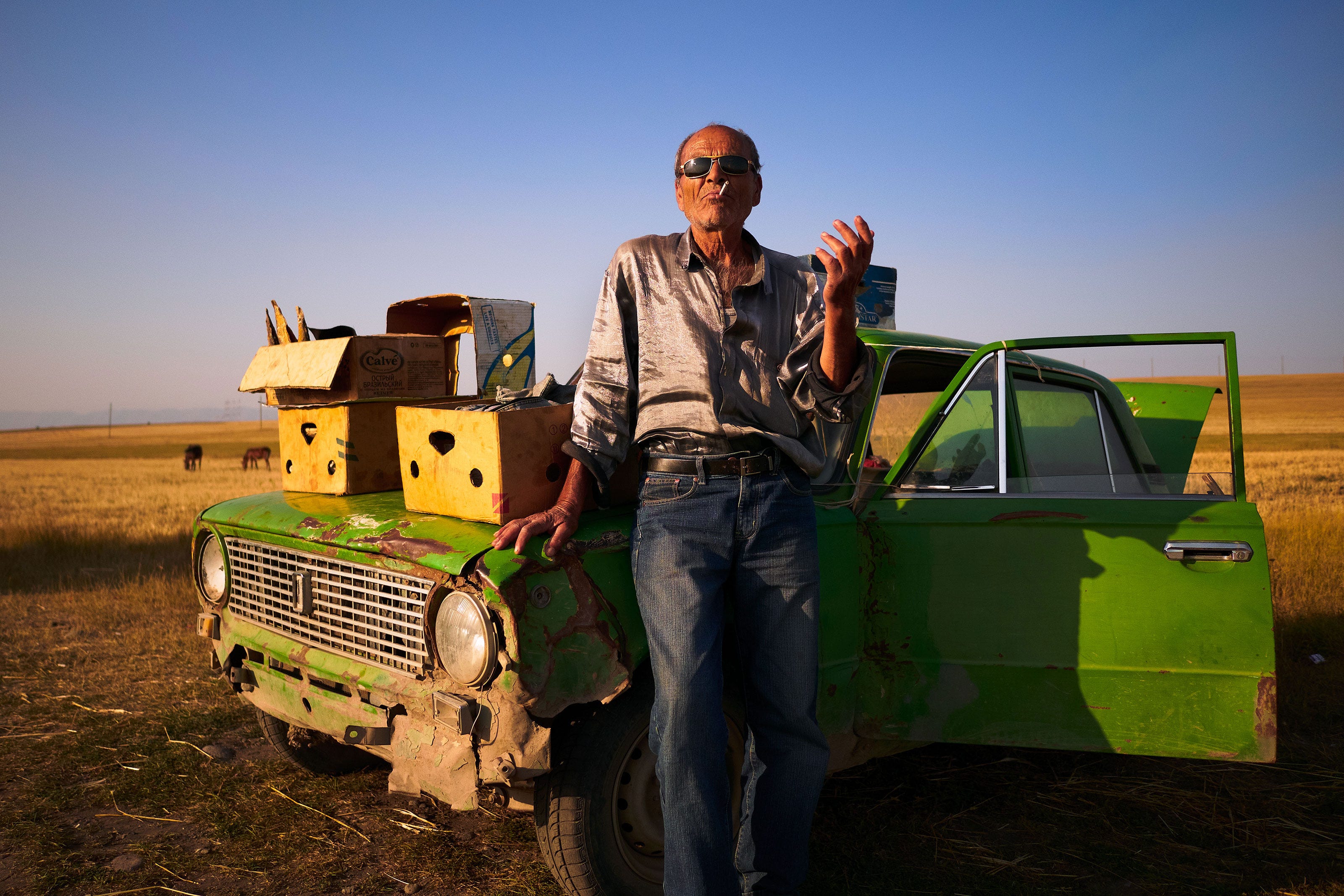
The biggest challenge in people photography is getting something real.
You find someone with an incredible presence. Maybe it’s their face. Maybe it’s a kind of ruggedness or charisma you can’t quite explain, but you know it when you see it.
Then… you point a camera at them, and it all vanishes.
They start performing. They put on a mask. Or they freeze and look awkward. That thing that made you want to photograph them in the first place disappears.
You end up with an image that’s technically fine. Exposure, focus, composition, all correct.
But the magic is gone.
And that’s what makes it painful. People with that kind of presence aren’t everywhere. When you finally find one and still can’t make a portrait that feels real and alive, it’s deeply frustrating.
I found a way around this almost by accident.
Years ago in India, I was traveling with my friend Hardik, who was translating for me. I’d find these incredibly photogenic, charismatic people, often elders, regular folks who weren’t used to cameras, and so often, the moment I raised the lens they would lock up.
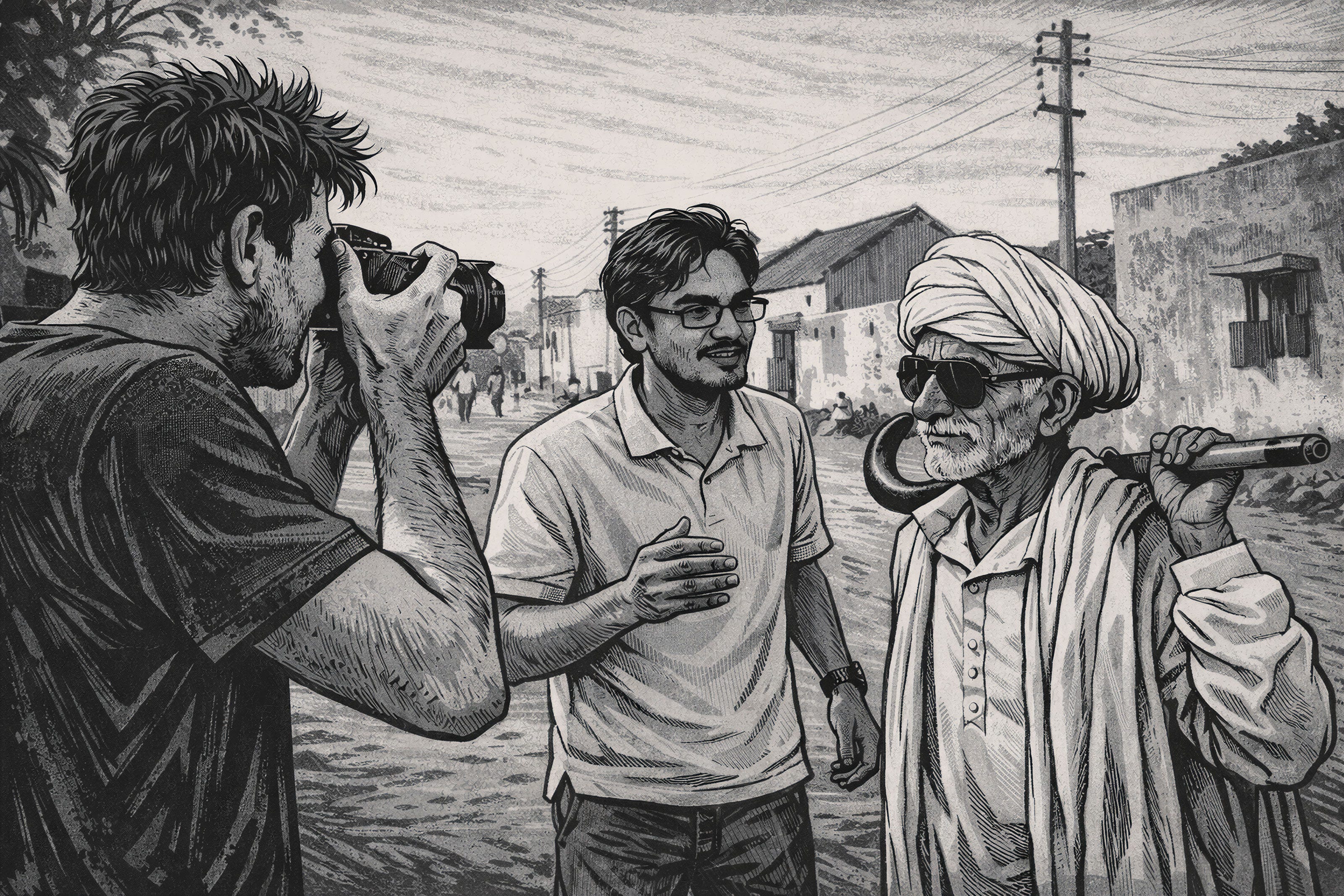
What I noticed, though, was that when Hardik would talk to them, something changed. They loosened up and forgot about the camera.
I’d start making a few frames while he was mid-sentence and, to my surprise, many of those images felt far more real and alive.
Equally good were the in-between moments, right after they’d finished speaking and before they remembered they were being photographed. They hadn’t gathered themselves back into that stiff, awkward pose yet.
That was the seed, and I’ve been working this way ever since.
Photographing people while…
This is how it tends to work for me now. Whenever I can speak the language, or I’m with someone who can, I talk to the person while I’m making photos. I keep the camera around chest level and shoot in short bursts, usually when I sense an expression or gesture coming, all while we’re chatting.
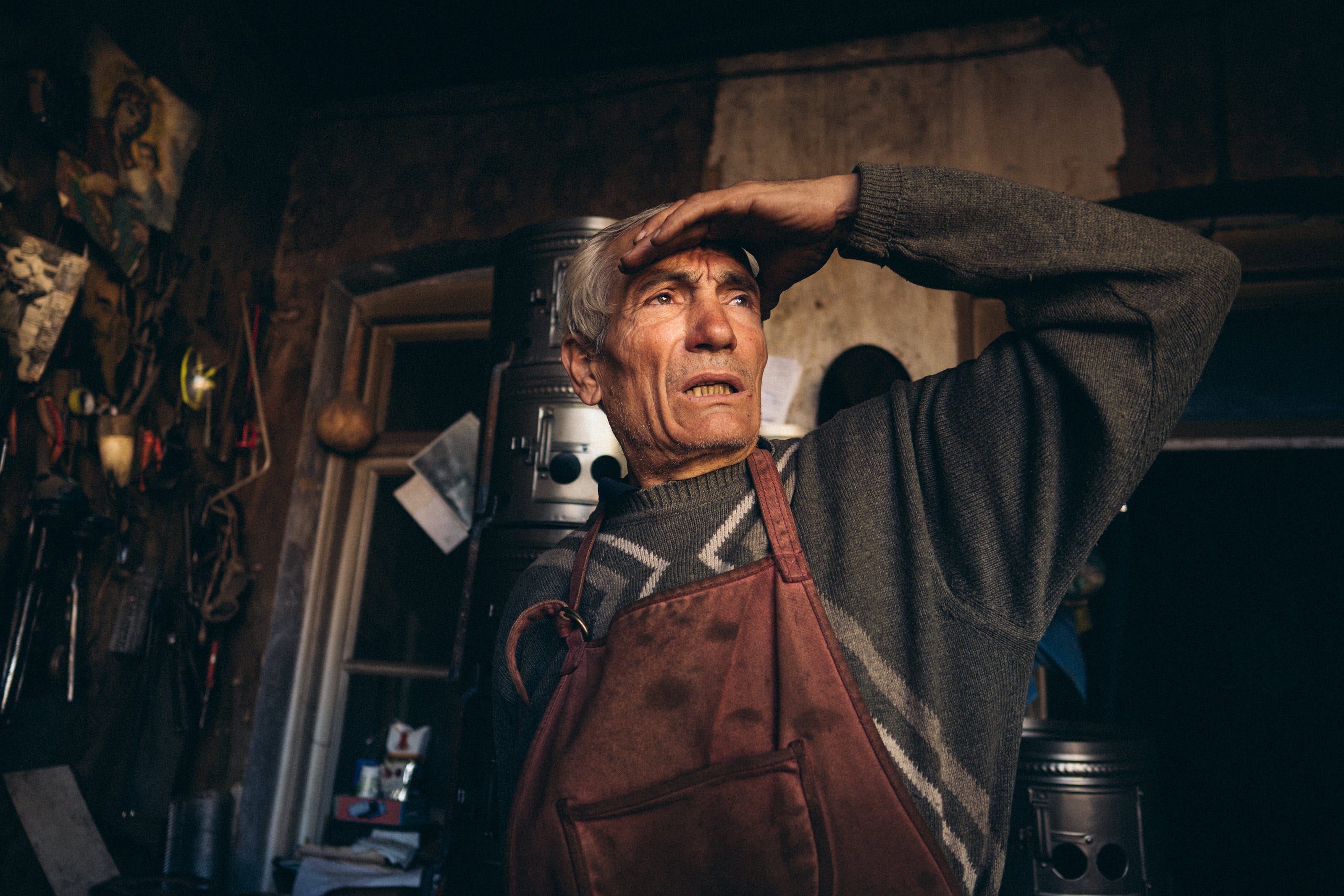
I look at photography through the prism of Visual Cues, a system that I’ve developed over the years. So, I’m paying attention to what those small moments are revealing. A gesture. A change in expression. Something that hints at how they’re feeling, or gives a glimpse into their character.
I’m open about it. I’ll usually say something like, “Don’t mind me, I’m just going to make a few frames while we talk. I’m trying to keep it natural.”
At first it feels a bit strange for them. But after a few bursts, they stop paying attention to the camera. The conversation takes over. That’s usually when the photographs start to feel real.
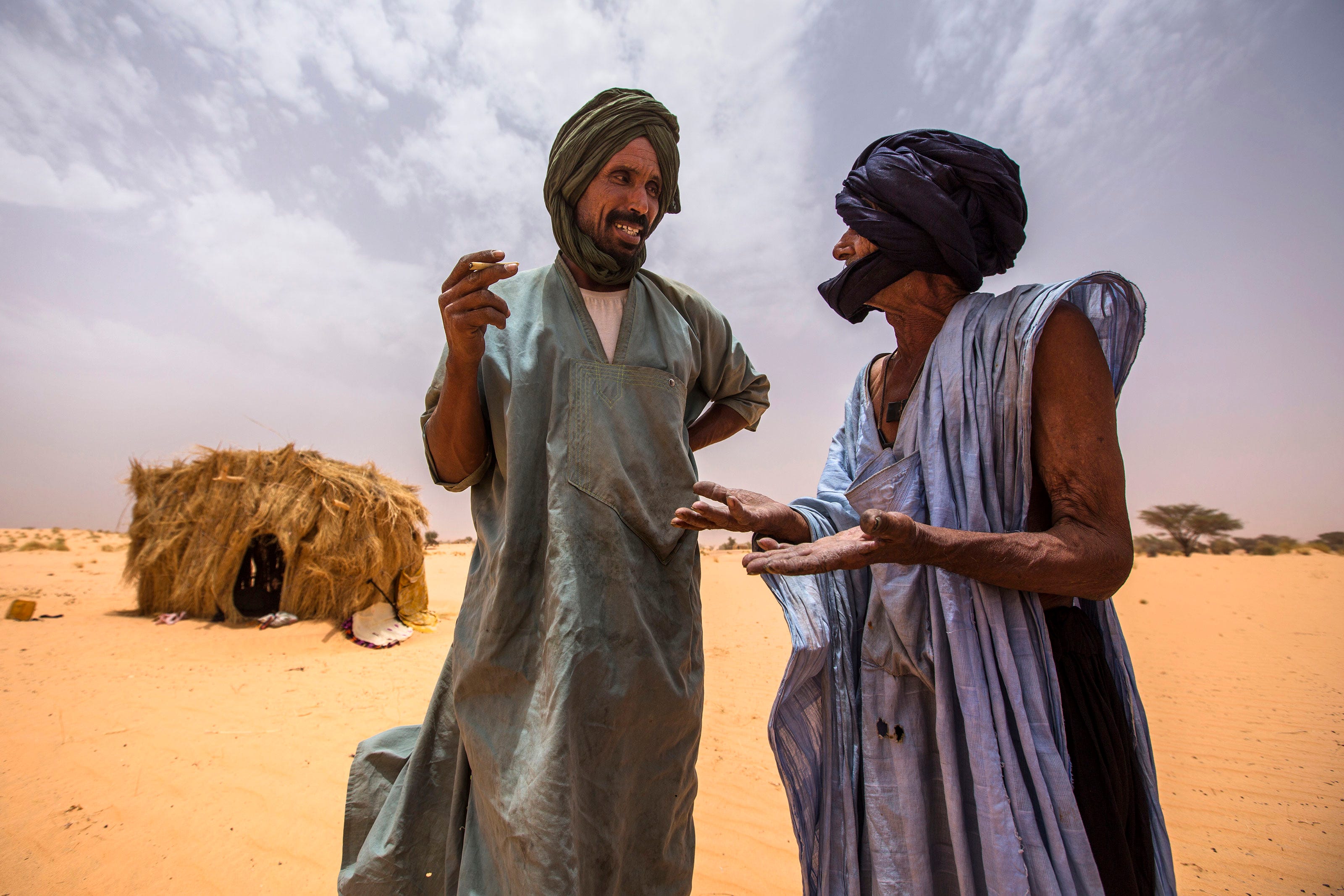
The conversation itself doesn’t need to be deep. Small talk works just fine.
I’ll ask about their day or their work. If there are multiple people around, even better. Once they start talking to each other, everything becomes easier. At that point, it feels less like making a portrait and more like observing. Almost like being a fly on the wall.
Why it works
I’m not a psychologist, and I don’t need to be one to notice that the moment you raise a camera in front of someone’s face, it can be overwhelming. People get nervous. Sometimes even fearful. The camera, the act of being photographed, becomes the main thing on their mind.
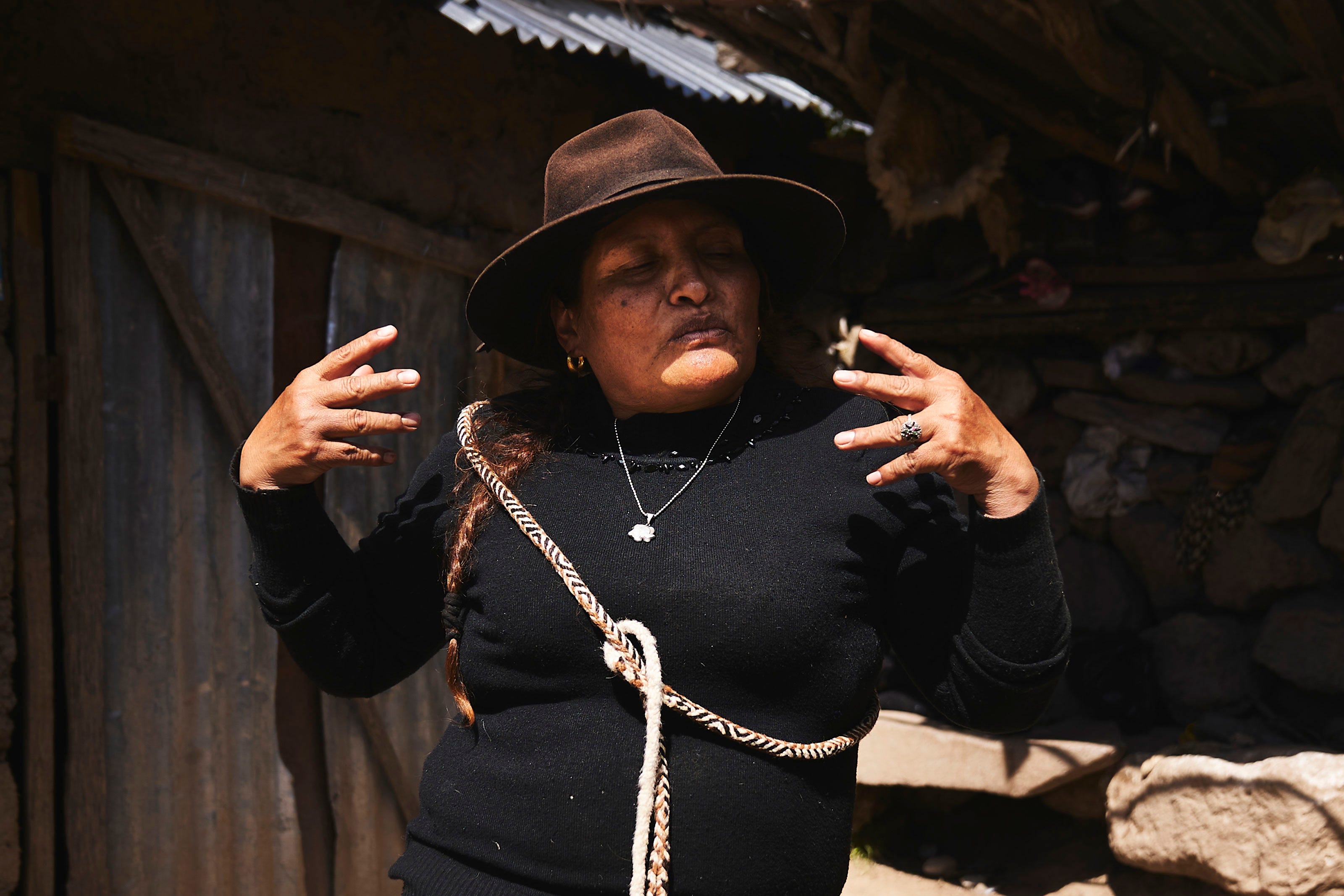
When you give them something else to focus on, like a conversation, that changes. Their attention moves away from the camera. It’s no longer the most important or intimidating thing around. Something more natural takes over. They become animated.
Hands start moving. Expressions come and go. They’re simply present.
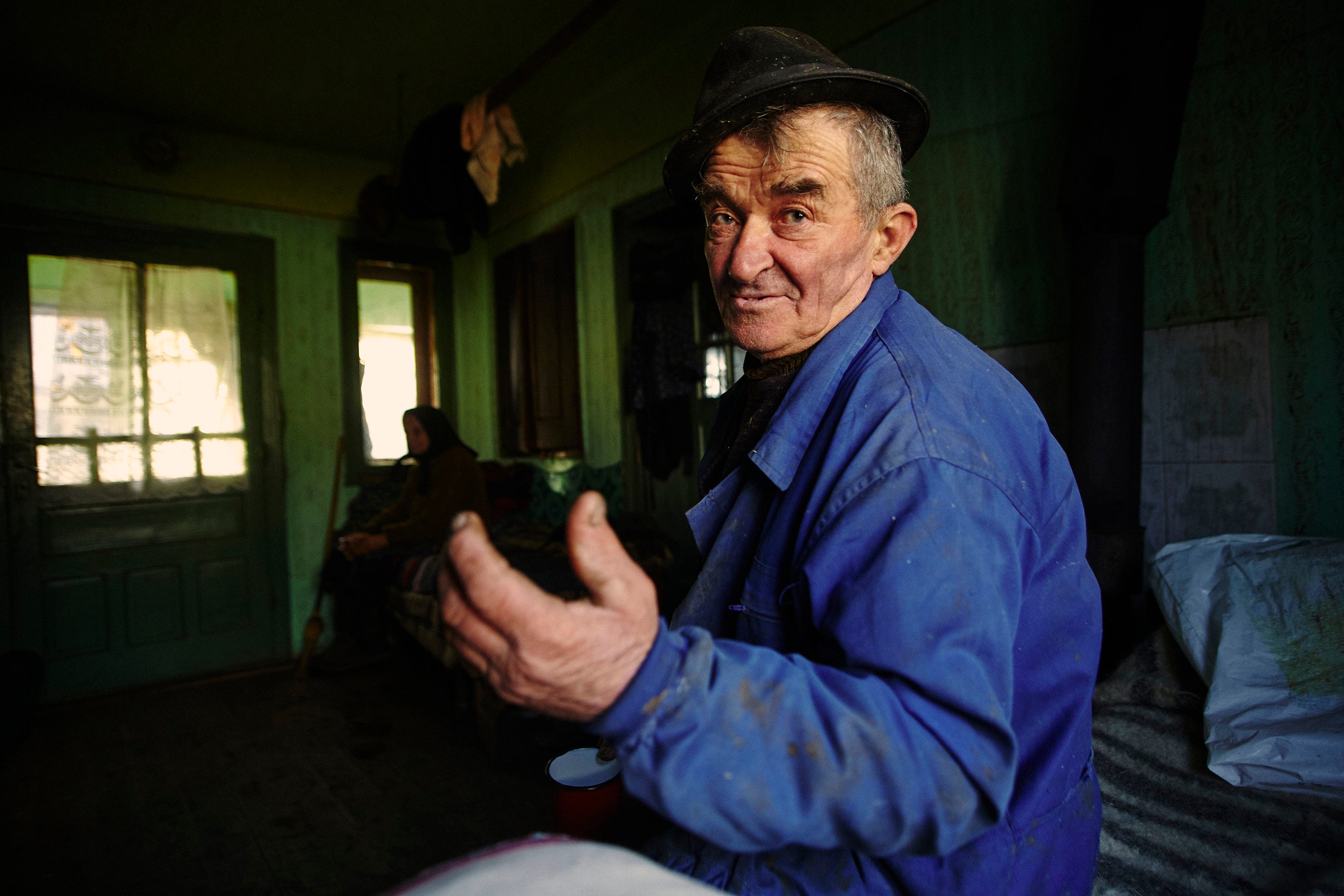
Even when they’re looking straight into the lens, like in the image above, it feels different. They’re talking, gesturing, reacting. What I’m seeing are visual cues I can work with, details that let me explore something deeper instead of making surface level, images that feel posed or awkward.
What if you don’t speak the language?
Fair question. If you’re traveling and don’t speak the local language, you still have a few options.
If the work matters to me, I’ll hire a translator. Even having a guide along can help, as long as they understand what I’m trying to do. I usually ask them to simply talk to the person while I make photos, without posing or directing them. Just a normal conversation that I can work quietly around.
What I’ve learned to watch out for is when a guide starts directing the person in front of the camera.
The moment someone is told how to stand or where to look, they become self-conscious. It’s usually well-meant, but it almost always makes things feel awkward and forced.
And if I don’t speak the language and don’t have anyone with me, I still talk. In my own language. With gestures, expressions, whatever works.
Even that clumsy communication gives the person something else to engage with, and sometimes that’s enough to bring a bit of life into the portrait.
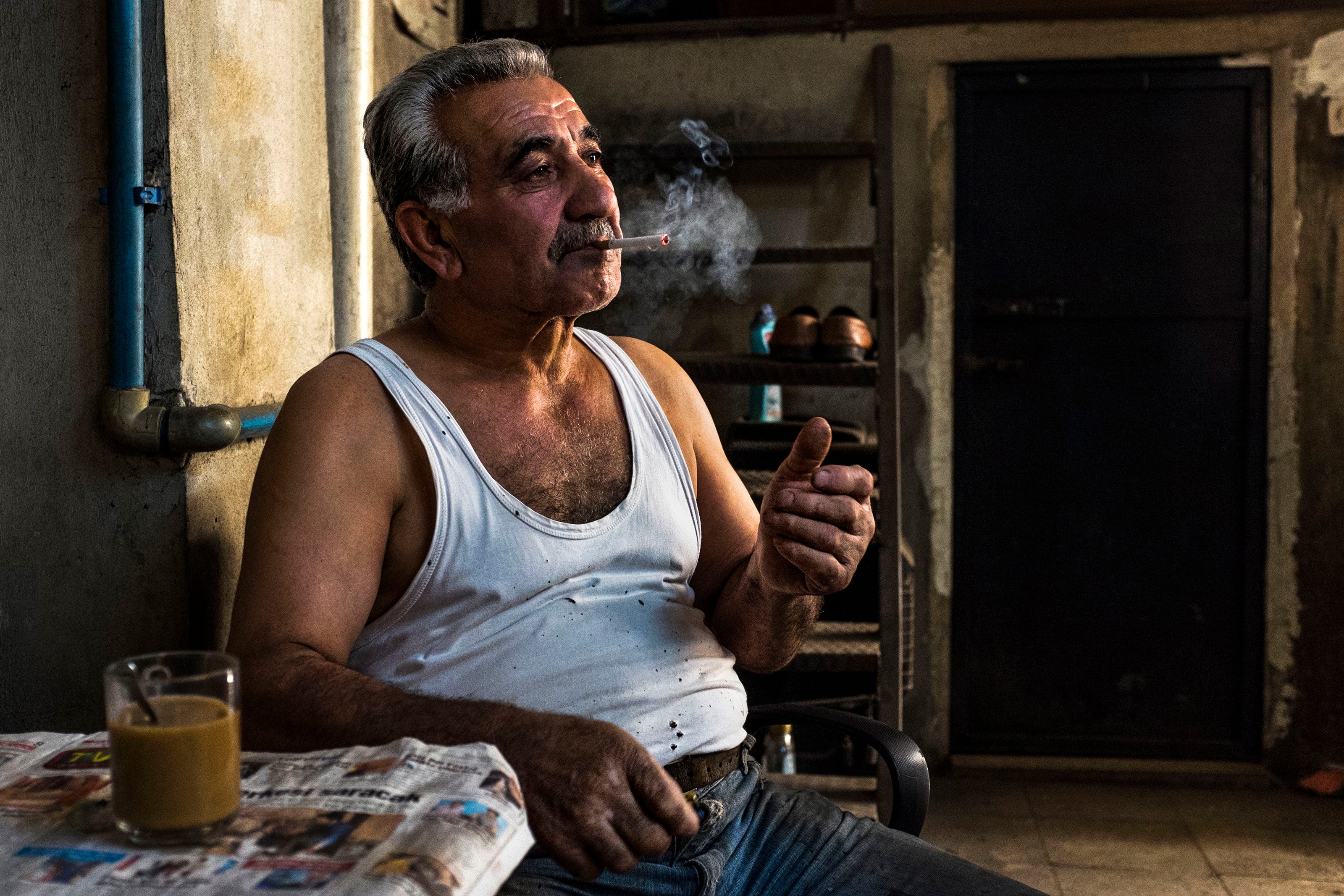
I clearly remember making the photo of the man above. This was in Istanbul. I could only say “thank you” and “good” in Turkish, and he couldn’t say much in English either. Still, we communicated. He offered me milk tea, showed me his workspace, and explained his trade as a cobbler, which I only understood because he showed me the shoes he was fixing. With a few gestures, with smiles, I made it clear that I’d be making some photos. He quickly forgot about the camera, and I ended up with the image you see here.
Try it yourself
I’d encourage you to experiment with this next time you’re photographing people. Even with those who seem completely comfortable in front of the camera, keep talking and keep making photos while the conversation is happening. You’ll often find the results feel more real, and sometimes noticeably more alive.
That was the case with the photo of the man at the top of this post. He was already at ease with the camera, but the frame that worked best came in the in-between moment, just after he’d finished saying something and taken a draw on his cigarette. For me, that was where he felt most like himself.
So… rather than standing there in silence, pointing a camera at someone and making the moment feel official or tense, bring some life into it.
Talk. React. Allow the interaction carry the photograph. The portraits that come out of it will often feel more alive and more real.
Of course, there are times when this approach won’t work, or isn’t needed. And if you feel you’re already getting something strong without the conversation, don’t interrupt it. Stay aware of what’s happening in front of you, and work with the situation as it unfolds.
If you’ve tried this approach, I’d be curious to hear how it worked for you. Let me know in the comments.
Visual cues as the foundation
I’ve mentioned visual cues a few times here. They sit at the foundation of how I think about photography and how I work in the field. I’ve put that thinking into a complete program, and for those who want more direct feedback on their own images, there’s also Visual Cues Coach (also part of the visual cues program, but available separately) which looks at how well your photos are working through the lens of visual cues.
In the new year, I’m adding a feature that turns any photograph you admire into a case study, breaking it down in terms of visual cues. The goal is to give you a clear, practical understanding of why an image works. Because of that addition, both will go up in price, so you might want to take advantage before that. Just a quick heads up.
I do this too, Mitchell! It works brilliantly until…sometimes micro movements I make mess up my composition. Other than that I use this tactic often and it’s a great way to get the shot.
Excellent advice. Thank you.